Industry
Aviation’s Gender Gap Isn’t Just a Pipeline Problem
3 min read

Love Aviation? Turn your passion into a career. Explore Aviation Maintenance Programs at AIM. Learn More
3 min read
By: The Aviation Co.
The aviation industry faces a workforce crisis. Pilot shortages and technical skill gaps threaten the future of an industry that can’t afford to sideline half the population. Yet women remain drastically underrepresented across every corner of aviation, and the problem runs deeper than getting more women interested in flying.
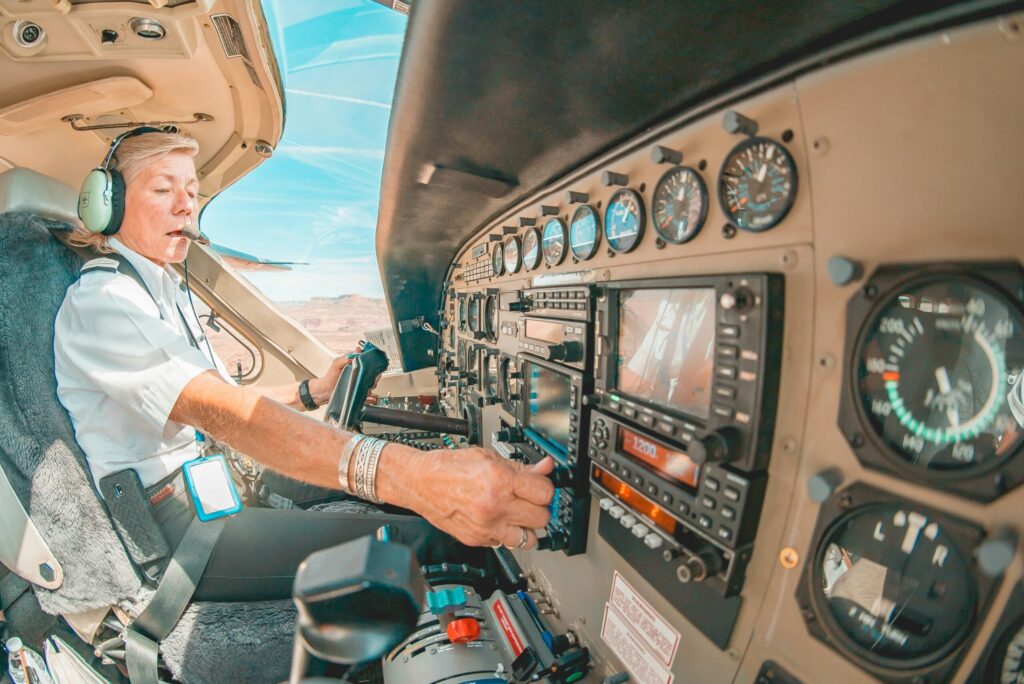
Women make up nearly half the global workforce, but only 4–6% of licensed pilots worldwide. In the United States, that figure inches up to 4.4%, but is still nowhere near parity. The technical side looks even starker: just 3% of certified aircraft mechanics and 4% of flight engineers are women.
These aren’t just pipeline statistics. These are retention failures.
Yes, we need more women in flight schools, maintenance programs, and aerospace engineering. But focusing solely on recruitment ignores what happens once they’re here. Women face mentorship gaps, biased evaluation systems, and work environments that undervalue their contributions. They hit ceilings in training programs, advancement tracks, and leadership opportunities, and then the industry wonders why they leave.
The conversation needs to shift. Instead of asking “How do we get more women into aviation?, we need to ask, “How do we make aviation a place where women want to stay?”
That means equitable pay, transparent promotion paths, inclusive work cultures, and active mentorship. It also means confronting the biases that still show up in hiring, scheduling, and evaluations. Because when women don’t see a future in this industry, they find one somewhere else, and aviation loses their talent, perspective, skills, and insights.
And the problem affects more than just equity. Diverse teams consistently outperform homogeneous ones, bringing varied perspectives that drive innovation. By failing to fully integrate women into the workforce, aviation is missing solutions to its most pressing challenges. In an industry facing unprecedented demand for skilled professionals, that’s a risk we can’t afford.
Airlines like Delta and United have launched programs supporting women pilots and mechanics. Aviation organizations spotlight female leaders and build mentorship networks. These efforts matter, but they’re isolated. Real change requires systemic transformation across the entire industry.
You can’t fix retention with recruitment alone. The aviation industry needs to implement policies that promote inclusive workplace cultures, provide genuine mentorship opportunities, and ensure equal advancement for women. Organizations must actively eliminate biases in hiring and promotion, then create environments where women thrive and lead.
Aviation stands at a crossroads. Either address the systemic issues driving gender disparity, and build a more resilient workforce equipped to meet future demands, or ignore them, and watch talent walk out the door.
The pipeline isn’t broken, it’s just not enough, and recruitment alone won’t close aviation’s gender gap. Without addressing the barriers that drive women out of the field, the industry’s progress will remain limited.The conversation doesn’t end here. Join the Aviation Co. to share your story, connect with mentors, and help redefine what leadership in aviation looks like.
© 2025 aviation.co All rights reserved.