Aeronautics
Diamond DA42: What Makes This Twin a Favorite Among Pilots
7 min read

Love Aviation? Turn your passion into a career. Explore Aviation Maintenance Programs at AIM. Learn More
7 min read
By: Aviation Co.
Walk any ramp and you’ll hear pilots comparing Baron specs or touting legacy twins, while the Diamond DA42 Twin Star sits quietly nearby. Here’s one of aviation’s blind spots: overlooking modern twins like the DA42 in favor of legacy names and nostalgia.
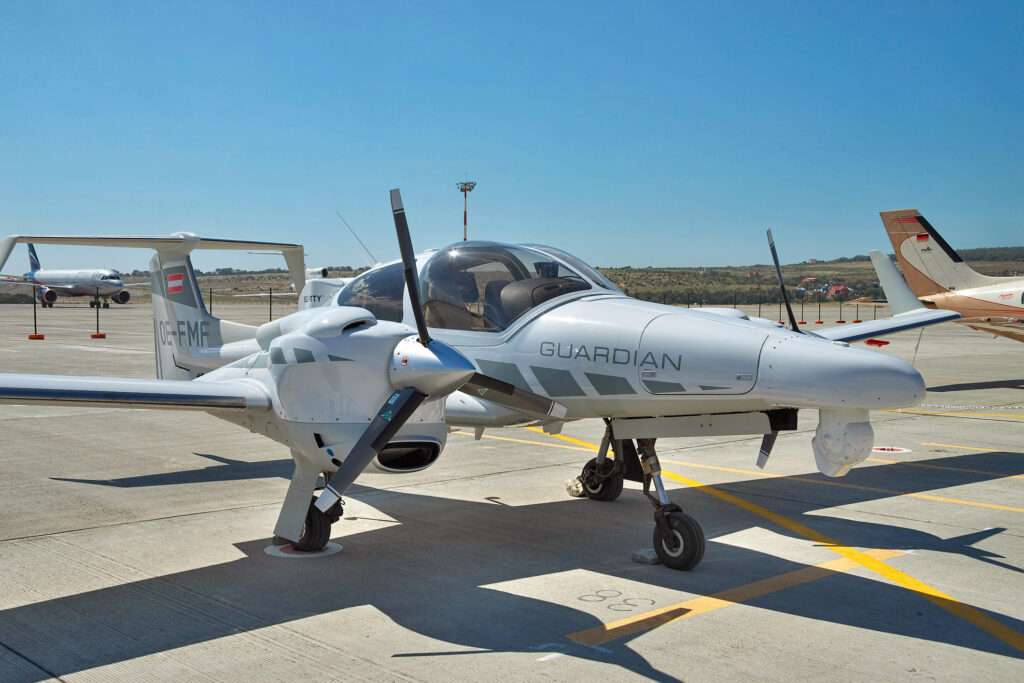
Built by Diamond Aircraft Industries in Austria, the Diamond DA42 doesn’t chase ramp appeal. Instead, it focuses on aerodynamics, efficiency, and functional avionics. While other twins lean on heritage, the DA42 proves smart engineering beats vintage reputation.
Whether you’re building multi-engine time, evaluating training aircraft, or considering your next purchase, the DA42 deserves serious attention. It’s not the flashiest choice, but it is often the smartest.
The Diamond DA42 family includes several variants, but two dominate today’s market: the DA42 NG and the Diamond DA42-VI. The DA42-VI is the most recent model with a new propeller and faster speeds, while the NG introduced the reliable Austro Engine powerplants that replaced earlier Thielert engines.
The DA42-VI (2012) features improved propeller and aerodynamic clean-ups, including rudder and engine cowling redesigns that greatly increased cruise speed and performance. With more than 20 improvements over the DA42 NG, the DA42-VI represents the ultimate evolution of the platform.
When you encounter a Diamond DA42-VI today, you’re seeing the most refined version of Diamond’s twin-engine concept, combining proven diesel reliability with enhanced aerodynamic efficiency.
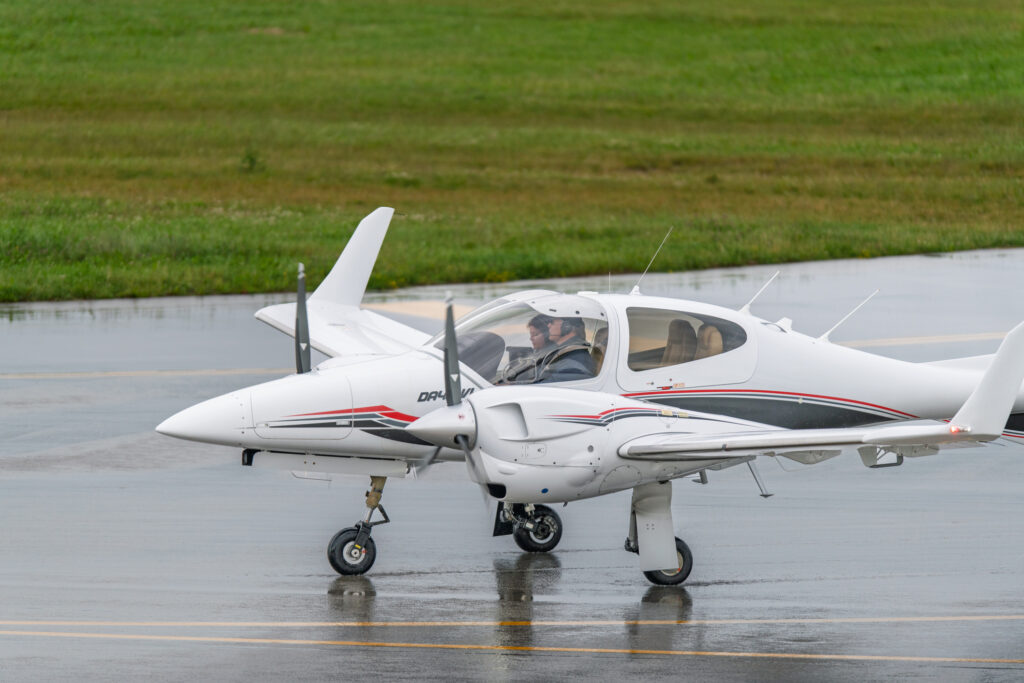
Both the Diamond DA42-VI and DA42 NG pair the composite airframe with Austro Engine AE 300 turbocharged diesel powerplants. These FADEC-controlled engines burn Jet-A instead of avgas, delivering fuel consumption around 12-15 gallons per hour compared to 18-22 GPH for comparable avgas (aviation gasoline) twins like the Piper Seminole or Beechcraft Duchess.
The constant speed propellers and diesel reliability mean consistent performance without the engine management complexity that intimidates many multi-engine pilots. So you’re saving money while flying an aircraft designed for global operations, where avgas costs $8-12 per gallon, or simply isn’t available.
For flight schools, this efficiency translates to lower operating costs, making twin-engine training more accessible. Private owners experience 30 to 40 percent lower fuel costs compared to traditional twins, along with reduced maintenance intervals due to the diesel engines’ automotive-derived reliability.
This isn’t just about operating costs. It’s about where general aviation is heading: smarter systems, better efficiency, and technology that serves pilots. The DA42’s diesel approach proves you don’t need to burn more fuel to get twin-engine capability.
Beyond being nice-to-have features, the standard Garmin G1000 suite and optional GFC700 autopilot are essential preparation for modern aviation careers.
Here’s what Baron and Duchess owners don’t want to admit: they’re teaching themselves skills that airlines don’t use. While legacy twins teach you to manage steam gauges and basic autopilots, the DA42 builds proficiency with glass cockpit integration and advanced automation that every major carrier expects from day one.
Flight schools choose the DA42 because it prepares students for the flight decks they’ll encounter in their careers, and not just the cockpits their grandparents flew. Private owners choose it because modern avionics reduce workload during IFR operations, improve situational awareness, and provide safety margins that analog instruments simply can’t match.
Flying outdated panels might build character, but flying the DA42’s integrated systems builds careers.
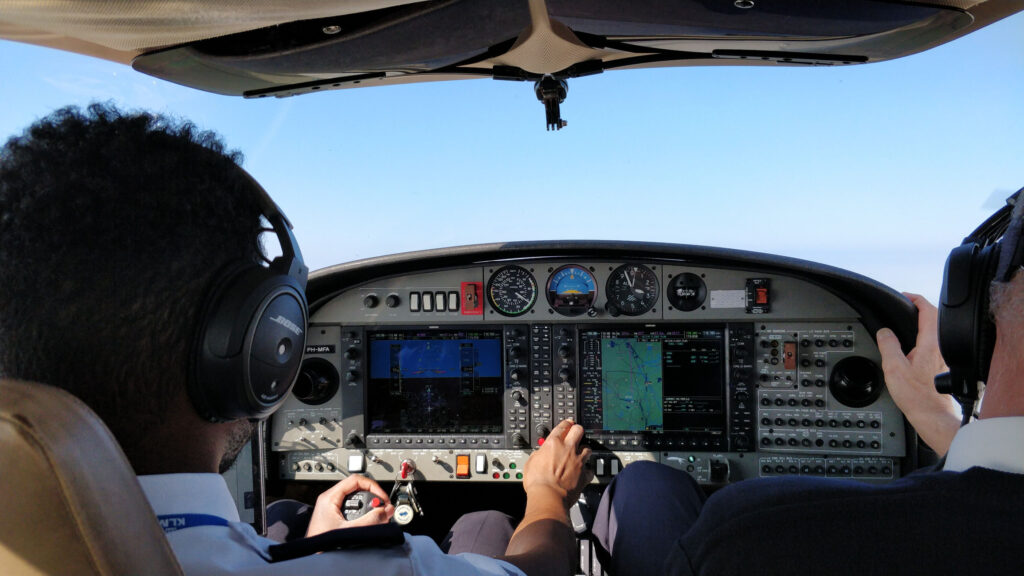
The Diamond DA42 delivers cruise speeds of 160-180 knots (kts) with a rate of climb exceeding 1,200 feet per minute (fpm) and a service ceiling above 18,000 feet. The useful load of 1,300 pounds handles real missions efficiently, even if the empty weight limits maximum loading compared to traditional twins like the Baron or Cessna 310.
Sure, a Baron carries more payload. But it also burns 40 percent more fuel to do it, requires more complex maintenance, and teaches you systems management that won’t exist in your next aircraft. The DA42 trades some payload capacity for operational efficiency that actually matters in day-to-day flying.
Range capabilities extend to 1,000+ nautical miles with reserves, making it suitable for serious cross-country missions. Landing distance requirements stay reasonable at most airports, and the retractable gear configuration keeps drag low during cruise while providing good ground handling characteristics.
For most twin-engine missions (training flights, cross-country travel, and light commercial work), the DA42 provides the performance you’ll actually use rather than impressive specs you’ll rarely need.
Yes, flight schools love the DA42 for its reliability and efficiency. But dismissing it as “just a trainer” misses the point entirely.
Here’s what separates the DA42 from legacy trainers: flight schools choose it because it teaches modern skills, not because it’s cheap to operate. Compare this to schools still using Seminoles: they’re teaching students to manage mixture controls and navigate with VORs. Meanwhile, DA42 students learn glass cockpit integration and WAAS approaches.
Private owners choose it for the same reasons: modern systems, operational economy, and confidence in the design. Business travelers appreciate the comfortable cabin, stable IFR platform, and predictable operating costs. Weekend flyers value the simplified systems and forgiving handling that make twin-engine flying accessible without the complexity of managing 1960s-era powerplants.
The DA42 works equally well for building multi-engine time, conducting business travel, or simply enjoying twin-engine flying without the maintenance headaches and fuel costs of legacy aircraft. Its global support network and parts availability also make it practical for operators outside traditional general aviation markets (something you can’t say about finding Baron parts).
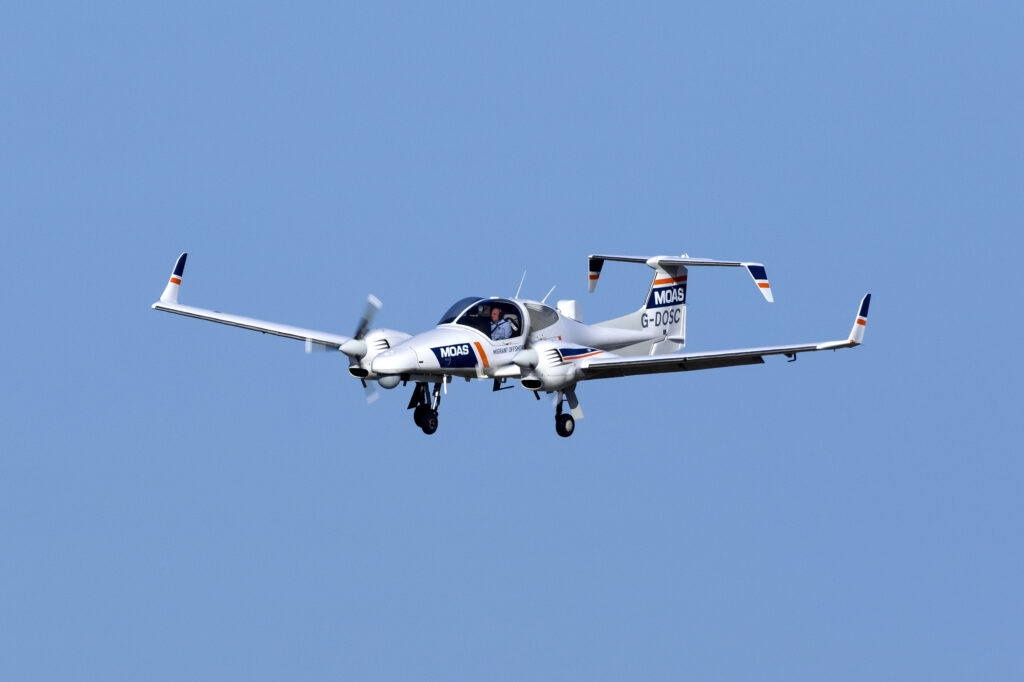
For pilots moving up from single-engine aircraft like the Diamond DA40, the DA42 represents a logical advancement. The systems feel familiar while adding twin-engine complexity and capability. Eventually, many pilots progress to the Diamond DA62 for larger missions.
This pathway makes sense: build skills on modern platforms instead of jumping between different design philosophies and avionics suites.
The Diamond DA42 Twin Star won’t impress anyone at hangar parties. It’s not a status symbol or conversation starter. Instead, it’s an aircraft that focuses on what happens in the cockpit and logbook rather than on the ramp.
Legacy twins like the Piper Seminole, Beechcraft Duchess, and Cessna 310 have their merits. Seminoles provide a solid, time-tested training platform, Duchesses offer classic handling, and the 310 delivers more payload. But each comes with trade-offs (higher fuel burn, older avionics, or maintenance complexity) that the DA42 minimizes without sacrificing capability.
What legacy twin owners often overlook is that they’re paying premium prices for outdated technology. Baron pilots weigh costly upgrades, and Duchess operators face shrinking parts availability, while DA42 owners benefit from modern reliability and global support.
Modern twin-engine aircraft should prioritize efficiency, reliability, and relevant technology over heritage appeal. The DA42 proves this approach works, delivering practical performance for pilots who value substance over flash.
The aviation community can keep debating vintage twins. Meanwhile, smart pilots are building time and capability in aircraft that reflect where general aviation is going: toward greater efficiency, simplified operation, and technology that enhances rather than complicates flying.
What’s your take: Would you choose the DA42 over a legacy twin, and why? Dive into discussions like this on The Aviation Co., a space for aviation lovers, frequent flyers, and pros to connect.
© 2025 aviation.co All rights reserved.