Industry
Why Aviation Professionals Are Key to Managing Flight Anxiety
6 min read

Love Aviation? Turn your passion into a career. Explore Aviation Maintenance Programs at AIM. Learn More
6 min read
By: Aviation Co.
Flight anxiety affects millions, but for aviation professionals, it’s also a chance to innovate and lead. Twenty-five million Americans struggle with a fear of flying, including some in the industry. While other sectors treat it as a customer service issue, aviation is uniquely positioned to tackle it head-on.
The industry sits on untapped career opportunities in mental health, passenger experience, and innovative training programs. Yet most of us don’t even know what flight anxiety really involves or how our expertise could address it. That needs to change.
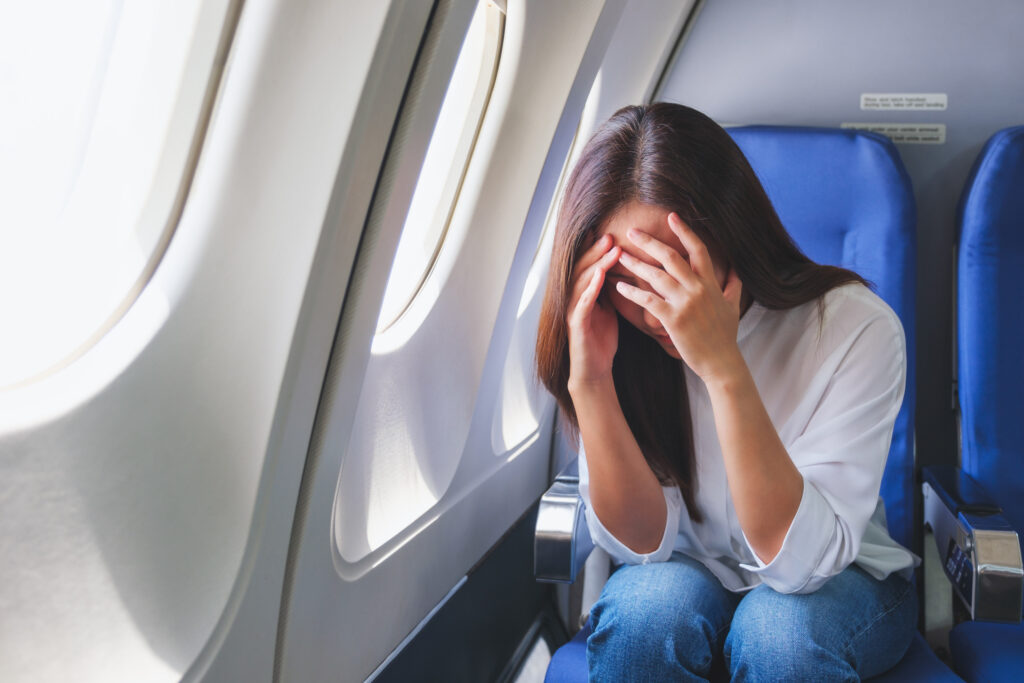
Flight anxiety is more than nervous flyers gripping armrests. It’s a multi-billion dollar problem that touches every corner of our industry.
Airlines lose revenue when anxious passengers avoid air travel, book fewer flights, or require medical diversions during panic attacks. A recent survey commissioned by The Points Guy and conducted by The Harris Poll found that more than one in three Americans (36 percent) have changed their travel plans due to fear of flying, with 22 percent opting for alternative transportation and 11 percent canceling trips altogether.
Training organizations also face setbacks when aviation students develop aerophobia (fear of flying) after difficult flight experiences, shrinking the pilot pipeline.
Corporate aviation feels the strain too, as executives unwilling to fly force companies into costly ground travel or missed opportunities. Meanwhile, flight attendants spend significant time managing anxious passengers without adequate mental health training — a drain that fuels burnout and contributes to delays.
The irony? Aviation is world-class at handling mechanical failures, yet unprepared for psychological ones, even though both can compromise safety and profitability.
Aviation professionals bring unique credibility to tackling flight anxiety. When a pilot explains turbulence, technical expertise turns into a calming tool, and passengers trust it more than generic reassurance.
Flight attendants who understand the difference between normal aircraft sounds and actual problems can provide specific, accurate information during takeoff and landing phases when anxiety peaks most intensely.
That’s why the most effective fear-of-flying programs aren’t led by therapists alone. They’re built by airlines and aviation pros who combine operational know-how with practical psychology, delivering reassurance rooted in both expertise and empathy.
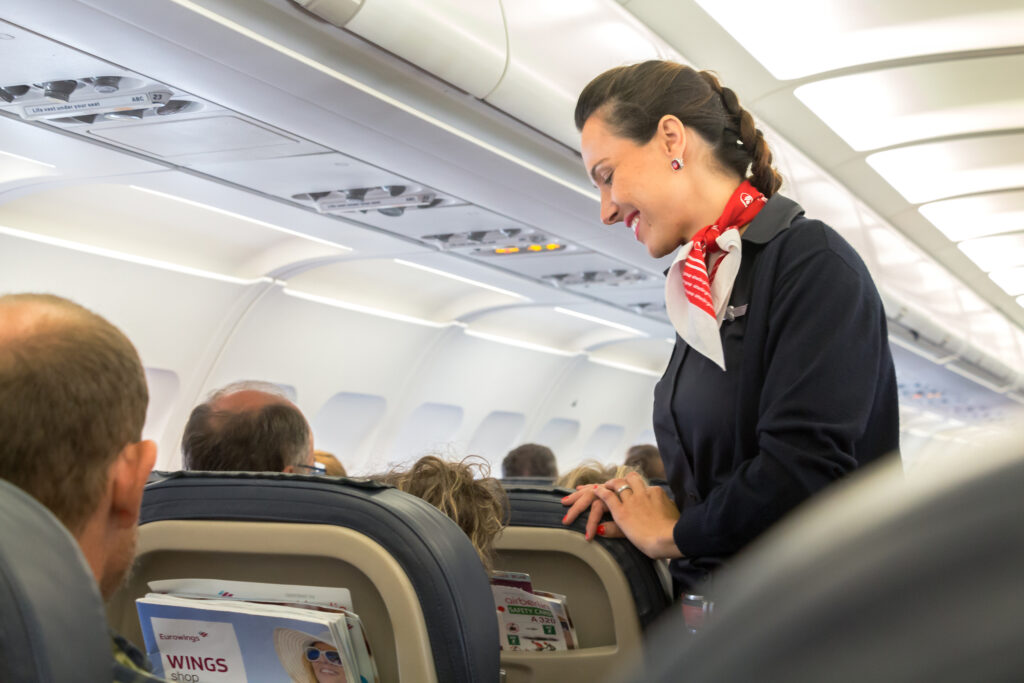
Airlines are finding that managing flight anxiety isn’t just good for passengers; it’s good for business. Virgin Atlantic’s Flying Without Fear program, led by pilots and cabin crew, generates meaningful revenue while strengthening customer loyalty.
Lufthansa’s approach, a comprehensive anxiety management program, includes virtual reality exposure therapy, guided meditation, and technical education, delivered by aviation professionals with additional training. This combines the credibility of aviation expertise with proven psychological techniques. The result? A credible, science-backed approach that passengers trust.
Regional training centers are also seizing the opportunity, offering courses that equip aviation professionals with cognitive behavioral therapy (CBT) techniques. This hybrid skill set opens new career paths, allowing aviation experts to diversify while applying their existing aviation expertise in a growing field.
The most successful approaches fuse aviation expertise with evidence-based anxiety treatment, creating solutions that address both the technical and psychological aspects of flight fear. Passengers respond best when education replaces reassurance: learning how safety systems and redundancies work turns fear into understanding.
Breathing exercises become more powerful when flight crews can teach techniques specifically during different flight phases. While deep breathing helps manage panic attacks generally, crews who understand when to apply takeoff-specific versus turbulence-specific techniques achieve better results by matching the intervention to the anxiety trigger.
Exposure therapy gains effectiveness when combined with an aviation context. Some programs now use actual aircraft for controlled exposure sessions, led by pilots who can explain what’s happening in real-time rather than therapists describing generic “flying experiences.” Technology integration follows the same principle, and virtual reality programs work best when developed with input from aviation professionals who understand what anxious passengers actually need to see and learn.
A clear divide exists in the industry: most aviation professionals know little about anxiety disorders, while most mental health professionals know little about aviation. This knowledge gap opens significant opportunities for aviation professionals willing to develop competency in both areas.
Direct roles include fear-of-flying instruction and training nervous students; consulting opportunities range from airline passenger-experience design to VR program development.
As the FAA increasingly recognizes mental health as critical to aviation safety, professionals who understand both psychology and operations are positioned at the forefront of aviation safety and innovation.

Think about your next job interview: when every other candidate has identical technical qualifications, what sets you apart? It’s the flight instructor who can work with nervous student pilots, the corporate pilot who can handle anxious executives, or the airline employee who understands passenger psychology beyond standard customer service.
Airlines are investing heavily in passenger experience, and executives are realizing that technical excellence alone isn’t enough. They need leaders who understand both aircraft systems and human psychology. The aviation professionals who develop these competencies position themselves for leadership roles as the industry recognizes mental health as a critical operational component.
The aviation industry stands at a crossroads. We’ve mastered the technical aspects of moving people safely through the sky, but we’ve largely ignored the human experience of flight. With over one-third of travelers affected by flight anxiety, this represents both a massive operational challenge and an unprecedented career opportunity.
The professionals who bridge this gap, understanding both aircraft systems and passenger psychology, will define the next evolution of aviation. While the industry has spent decades perfecting mechanical reliability, the future belongs to those who can deliver both technical excellence and human understanding.How will you position yourself as airlines redefine the future of passenger experience?
Join The Aviation Co. to discover emerging career paths, connect with industry innovators, and access the insights you need to stay ahead of aviation’s evolving landscape.
© 2025 aviation.co All rights reserved.