Aeronautics
Inside the Concorde: A Look at the Jet’s Historic Luxury Interior
8 min read

Love Aviation? Turn your passion into a career. Explore Aviation Maintenance Programs at AIM. Learn More
8 min read
By: Aviation Co.
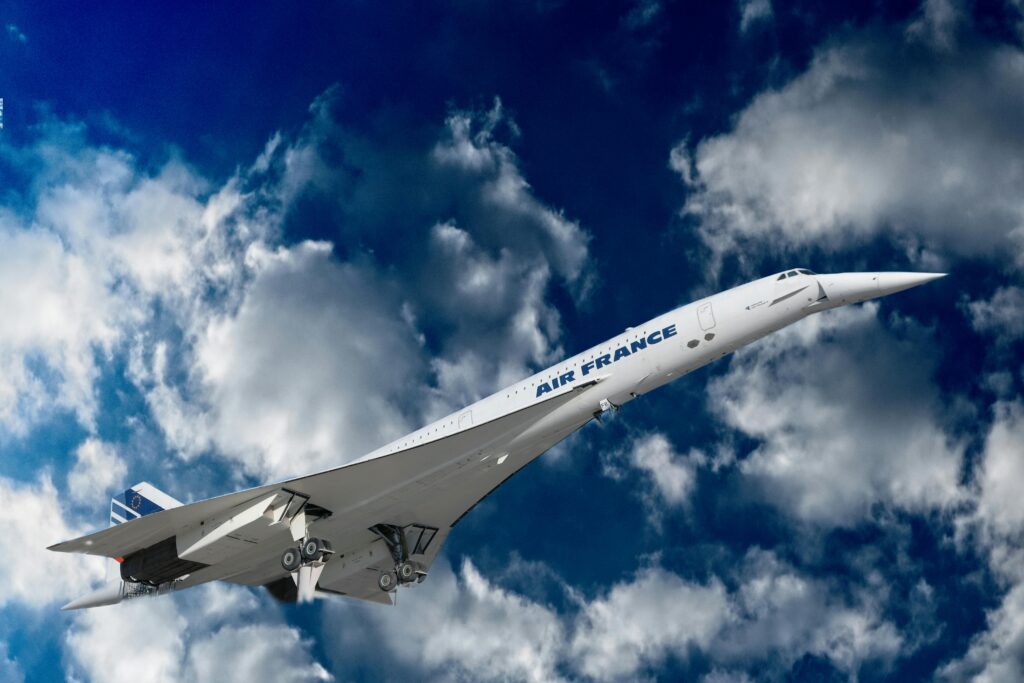
Decades after its final flight, the Concorde remains one of the most iconic aircraft in aviation history. Known for its supersonic speeds and sleek design, the Concorde wasn’t just a feat of engineering, but a symbol of luxury, exclusivity, and innovation. While much attention has been given to the speed and innovation of the Concorde flight experience, the Concorde interior tells a story of mid-20th-century opulence.
In this article, we’re taking a closer look inside the Concorde—one of our favorite aircraft here at Aviation Co.—to explore the jet’s historic luxury interior, from its streamlined cabin layout to the experience of flying like the elite.
First, some context: The Concorde was a joint project between British Airways and Air France, entering service in 1976 and operating until 2003. The French-built prototype, 001, was assembled in Toulouse, while the British-built prototype, 002, was assembled in Filton near Bristol.
Routes regularly flew between major hubs like New York, London, and Paris. With cruising speeds of Mach 2.04—over twice the speed of sound—the aircraft could fly from JFK to Heathrow in under 3.5 hours, cutting travel time in half compared to standard commercial jets.
But what truly made the Concorde experience elite wasn’t just the velocity; it was the exclusivity. Only 20 Concorde aircraft were ever built, and seats often came with a first-class price tag, catering to celebrities, CEOs, and royalty. For those lucky enough to board, the Concorde interior offered an experience unlike any other.

At first glance, the Concorde interior may not seem as lavish as today’s first-class cabins or private jets. There were no lie-flat beds or built-in entertainment screens. However, what the jet lacked in modern amenities, it made up for in refined elegance and a forward-thinking design that prioritized comfort, service, and style.
The design of the Concorde cabin was shaped by the aircraft’s sleek, delta-wing structure. The interior was compact yet thoughtfully arranged with a fuselage measuring just over nine feet wide. The 2-2 seating layout accommodated only 100 passengers, creating an exclusive atmosphere that could rival the comfort of many private jets.
The Concorde’s interior design reflected a refined, minimalist approach that emphasized both comfort and futuristic aesthetics. The Concorde interior was fitted with plush leather seats that reflected the understated luxury of the era. Each seat had generous legroom for its time, along with recline capabilities, fold-out tray tables, and personal reading lights. The color schemes—typically soft neutrals like cream, gray, and navy—were chosen to evoke calm and sophistication during flight.
British Airways and Air France each customized their interiors slightly; the British Airways Concorde featured a more business-like aesthetic, while the Air France Concorde leaned toward a softer, more luxurious ambiance. Regardless of the operator, every detail of the Concorde interior was carefully curated to exude refinement.
From takeoff to touchdown, every detail reflected a commitment to refined luxury, and the dining experience was no exception. The sleek, minimalist interiors, designed with polished finishes and plush leather seats, set the stage for a meal service that felt more like fine dining than in-flight fare.
The onboard meal service was nothing short of gourmet, with menus crafted by top chefs and paired with vintage Champagne and fine wines. Guests dined on real china with silver cutlery, even at cruising altitudes above 60,000 feet.
The menu often included delicacies like caviar, lobster, filet mignon, and rich French pastries. The British Airways Concorde famously served Laurent-Perrier Grand Siècle Champagne, reinforcing the air of indulgence. Even though a Concorde flight was drastically shorter, service was delivered at an unhurried pace, ensuring passengers enjoyed every moment of their supersonic journey.
While the Concorde interior didn’t feature the entertainment systems we’ve come to expect today (its lifespan was only from the 70s into the Millennium, after all), passengers were provided with leather-bound travel kits, personalized service, and an intimate cabin environment. Flight attendants were meticulously trained to cater to a high-profile clientele, offering a level of attention more akin to a private club than a commercial airliner.
Even the lavatories were sleek and well-appointed, often stocked with designer toiletries. The minimalist design of the Concorde interior contributed to its futuristic feel, making passengers feel like they were stepping into the next era of air travel.
Perhaps the most breathtaking part of the Concorde interior was what lay just beyond the windows. Flying at altitudes nearly twice that of standard commercial jets, Concorde passengers could see the curvature of the Earth and the deep blue of the stratosphere. Sunsets and sunrises from the Concorde were often described as surreal, making the view itself one of the most luxurious parts of the journey.
The Concorde was officially retired in 2003, following a combination of factors—including high operating costs, environmental concerns, and safety questions raised after the tragic Air France Flight 4590 crash in 2000. Despite this, the aircraft’s cultural legacy and iconic design continue to captivate aviation enthusiasts.
Though the Concorde no longer graces the skies, its legacy lives on in museums around the world. Several original aircraft—complete with their sleek interiors and iconic nose design—are now preserved for public viewing. In the U.S., you can step inside a Concorde at the Smithsonian’s National Air and Space Museum in Washington, D.C., and aboard the Concorde Alpha Delta at New York City’s Intrepid Sea, Air & Space Museum. The Museum of Flight in Seattle also houses one of these legendary jets.
Across the Atlantic, Aerospace Bristol in Filton (the birthplace of the British-built Concorde) offers an especially poignant exhibit located just steps from the original assembly site. These museums give visitors a rare opportunity to experience the Concorde’s interior design up close, offering a tangible glimpse into a remarkable chapter of aviation history and luxury air travel.
The Concorde’s interior remains a symbol of an era when speed, luxury, and design effortlessly coexisted. Though its physical space was compact by today’s standards, the experience it offered was grand. From its sleek leather seating and gourmet dining to the unmatched view at 60,000 feet, the Concorde was more than a plane—it was a statement.
Today, as aerospace companies experiment with the next generation of supersonic jets, the allure of the Concorde interior reminds us that innovation and elegance can indeed share the same runway.
What’s your take: How much did the Concorde’s interior design contribute to its legendary status? Dive into discussions like this on The Aviation Co., a space for aviation lovers, frequent flyers, and pros to connect.
How much did a ticket on the Concorde cost when it was in service?
Flying on the Concorde came with a hefty price tag that matched its exclusivity. In the late 1990s and early 2000s, a round-trip ticket from New York to London or Paris typically cost around $12,000—equivalent to over $20,000 today when adjusted for inflation. This premium placed Concorde firmly in the realm of CEOs, celebrities, and world leaders.
What was the cabin noise level like on the Concorde compared to other jets?
While Concorde’s exterior engines were among the loudest in aviation, its cabin told a different story. Inside, passengers experienced noise levels similar to or slightly louder than modern subsonic jets—comparable to sitting near the wing on a Boeing 747. The sound was a steady background hum, noticeable but far from disruptive. Many passengers recalled being able to hold conversations comfortably and enjoy fine dining without shouting.
Did the Concorde offer any in-flight entertainment or Wi-Fi?
By today’s standards, the Concorde offered little in the way of in-flight entertainment. There were no seatback screens, Wi-Fi, or on-demand movies. Instead, passengers received a small selection of newspapers, magazines, and leather-bound travel kits. Some flights played short films on overhead monitors, but most guests found entertainment in the novelty of supersonic travel itself.
Were there different seat classes on the Concorde, or was it all first class?
Unlike modern jets, which are divided into multiple cabins, the Concorde was entirely first class. Its compact 2-2 seating layout accommodated just 100 passengers, with no economy or business sections. This design gave every traveler the same elite experience, from plush leather seating to gourmet dining served on fine china.
What made the Concorde’s design influential for future aircraft interiors?
The Concorde’s interior design was groundbreaking in its minimalist approach, prioritizing sleek lines, neutral tones, and functional elegance. While compact, it conveyed refinement through leather seating, streamlined layouts, and subtle lighting — concepts that would later inspire premium cabins across the industry. Its emphasis on an exclusive, boutique atmosphere foreshadowed today’s private jet and first-class aesthetics.
© 2025 aviation.co All rights reserved.