Industry
What Is a NOTAM? Meaning, Examples, and Why It Matters
8 min read

Love Aviation? Turn your passion into a career. Explore Aviation Maintenance Programs at AIM. Learn More
8 min read
By: Aviation Co.
In aviation, up-to-date information is non-negotiable. One of the most critical tools for keeping flight operations safe and efficient is the NOTAM. Originally known as a “Notice to Airmen,” the term has been modernized to Notice to Air Missions, a move toward more inclusive aviation terminology.
In July 2025, newly appointed FAA Administrator Bryan Bedford declared that the United States’ aging air traffic infrastructure is “not acceptable.” Backed by a $12.5 billion Congressional funding package (and billions more proposed), the FAA is moving quickly to overhaul outdated systems like NOTAMs, which pilots, dispatchers, and controllers rely on to stay informed and avoid dangerous surprises.
So what exactly is a NOTAM, and why is the system getting a major upgrade? Here’s what you need to know.
First things first: What is a NOTAM? A NOTAM is an official alert that provides real-time alerts about changes or hazards in the National Airspace System (NAS). These notices may affect aerodromes, airspace, navigational aids (navaids), or aircraft operations, and they are distributed by government bodies such as the FAA (Federal Aviation Administration) in the U.S. or ICAO (International Civil Aviation Organization) globally.
In the U.S., the FAA manages NOTAMs. Globally, ICAO (the International Civil Aviation Organization) provides guidelines for standardization.
NOTAMs are designed to supplement—not replace—published charts and procedures. They serve as real-time updates to keep flight crews informed of anything that could impact safety. It ensures that pilots, dispatchers, and air traffic controllers have the latest aeronautical information necessary to make informed decisions. Whether it’s a closed runway (rwy), a taxiway (twy) outage, or a temporary flight restriction (TFR) due to a VIP movement or air-show, these alerts help maintain aviation safety at every level of operation.
NOTAMs are essential for situational awareness. They provide time-critical updates that help pilots, dispatchers, and air traffic controllers make safe and informed decisions. They alert crews to airspace restrictions, closed runways, navaid outages, or changes to instrument approaches, all of which can significantly impact a flight. Ignoring a NOTAM can lead to delays, deviations, or worse: violations and safety risks.
In March 2025, a multi-hour outage of the NOTAM system forced delays nationwide, echoing a similar meltdown in January 2023 that grounded over 11,000 flights. These incidents weren’t isolated glitches—they were symptoms of a system that’s buckling under outdated infrastructure.
By keeping everyone updated with the latest operational information, NOTAMs play a vital role in maintaining aviation safety and ensuring smooth, compliant flight operations across the National Airspace System (NAS).

There are several types of NOTAMs, each designated for a specific purpose. Let’s review a few of them.
The “D” in NOTAM (D) stands for “distant,” meaning these notices contain information that affects both local and long-range flight operations. NOTAM (D)s cover essential details about the condition or availability of aerodrome facilities and services that could impact a pilot’s ability to safely land, take off, or navigate through controlled airspace.
These notices include alerts about runway (rwy) and taxiway (twy) closures, inoperative navaids, unlit towers or construction cranes near flight paths, and even parachute jumps or temporary obstructions. They’re relevant for both VFR and IFR flights and are particularly critical for flight crews unfamiliar with a specific airport or region.
For example, a NOTAM (D) might notify pilots that runway edge lighting is out of service overnight, or that a newly constructed obstacle now stands within three nautical miles of the departure corridor.
In short, these NOTAMs provide timely situational awareness to support safe aircraft operations—whether you’re flying a short domestic hop or planning a cross-country route.
An FDC NOTAM (an acronym for Flight Data Center NOTAM) is issued by the FAA’s Flight Data Center and typically addresses regulatory or procedural changes that affect the National Airspace System (NAS). Unlike NOTAM (D)s, which focus on local or facility-level disruptions, FDC NOTAMs address more systemic updates that often impact multiple flight routes or aircraft types.
These notices are especially critical for pilots operating under IFR (Instrument Flight Rules), as they may include temporary revisions to instrument approach procedures, airspace structure modifications, or restrictions imposed by aviation authorities. For example, an FDC NOTAM might announce the suspension of a GPS-based approach due to a navaid outage, or define altitude and routing changes for en route traffic during a major airspace reconfiguration.
FDC NOTAMs are also used to communicate wide-reaching temporary flight restrictions (TFRs), such as those established for natural disaster zones, major sporting events, or VIP movements. Because FDC NOTAMs can override charted procedures and planned routing, staying informed is essential for pilots, dispatchers, and anyone involved in flight operations—especially when crossing busy or complex segments of U.S. or international airspace.
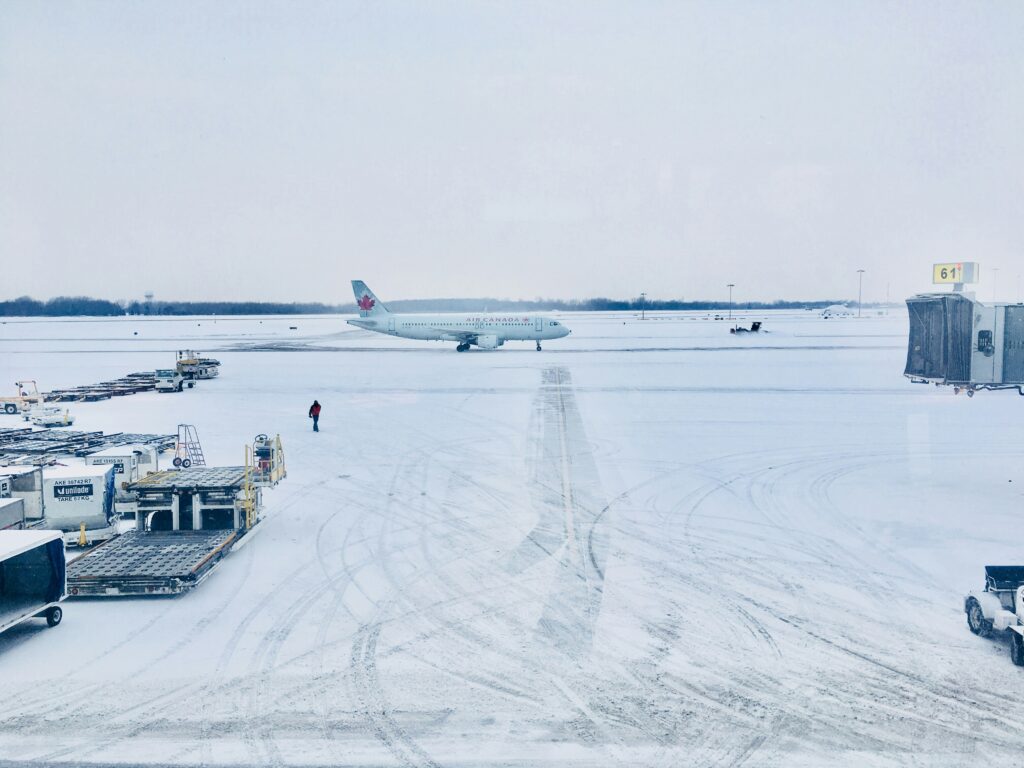
A Snowtam is a special type of NOTAM issued to report runway surface conditions caused by snow, slush, ice, or standing water associated with winter weather. Standardized under ICAO guidelines, Snowtams provide pilots and dispatchers with critical information to assess takeoff and landing performance at affected aerodromes.
These NOTAMs use a structured format to describe factors such as runway contamination, depth of snow, braking action, and whether snow removal is in progress. Snowtams are particularly important for aircraft operating in cold-weather regions, where rapidly changing surface conditions can significantly affect aviation safety.
Military NOTAMs provide information specific to military airfields, operations, and procedures. These notices are primarily used by military pilots and dispatchers, but they can also impact civilian flights, especially when military exercises or restrictions affect shared airspace.
Examples include temporary closures of runways, changes to instrument approach procedures at military installations, or airspace reserved for training missions, aerial refueling, or live-fire exercises. In some cases, TFRs may be issued in conjunction with military operations, and VFR or IFR civilian traffic may be rerouted to maintain aviation safety.
Pilots operating near or through special use airspace (SUA) should review relevant military NOTAMs as part of their flight planning process to avoid unexpected airspace restrictions or en route hazards.
Here are a few examples of what a NOTAM might include:
Despite their importance, the NOTAM system has been criticized for being dense, outdated, and hard to interpret. Many contain irrelevant or expired information, cluttering briefing systems and risking critical details being missed.
In response, the FAA has introduced initiatives to modernize the format and improve clarity, including graphical NOTAMs and filtering tools. The goal is to reduce human error and ensure that relevant data is accessible and easy to interpret.
ICAO is also leading efforts to create a more standardized, digital NOTAM system that integrates with global databases and enhances international flight operations.
The goal? Make NOTAMs more user-friendly, searchable, and impactful.

Despite being a critical safety tool, the NOTAM system is widely viewed as outdated, cluttered, and difficult to interpret. Dense formatting and irrelevant notices can cause even experienced pilots to overlook important updates.
A series of high-profile outages—including a system-wide failure in 2023 and another in March 2025 that disrupted parts of the NAS—highlighted just how fragile the current infrastructure is. In response, the FAA has fast-tracked a full overhaul of the system, with a rollout now slated for September 2025, months ahead of schedule.
Led by CGI Federal and Google Public Sector, the upgrade will introduce real-time alerts, smarter filtering, and modern interfaces tailored to how pilots operate today. For the first time in decades, NOTAMs may shift from a regulatory burden to a truly reliable decision-making tool.
From runway closures to GPS outages, NOTAMs are aviation’s real-time warning system. Whether you’re flying a commercial jet, planning a cross-country general aviation flight, or operating a military aircraft, NOTAMs are (currently) a non-negotiable part of safe and legal flying. They serve as a real-time safety net for the National Airspace System, protecting pilots, passengers, and ground personnel alike.
They’re essential to flight planning and airspace safety… but they’ve long been trapped in outdated formats that increase risk instead of reducing it. Now, with long-overdue modernization underway, the NOTAM system is on the cusp of potentially becoming what it was always meant to be: clearer, smarter, and more reliable.
As new tools roll out and digital upgrades take hold, understanding how to read, interpret, and apply NOTAMs will become even more important for students, professionals, and everyone who plays a role in keeping aviation safe.
What’s your take: Is the aviation industry doing enough to make NOTAMs clearer, faster, and easier to use? Dive into discussions like this on The Aviation Co., a space for aviation lovers, frequent flyers, and pros to connect.
© 2025 aviation.co All rights reserved.