Aeronautics
Why the Airbus Beluga XL Is Quietly Reshaping Aviation Logistics
6 min read

Love Aviation? Turn your passion into a career. Explore Aviation Maintenance Programs at AIM. Learn More
6 min read
By: Aviation Co.
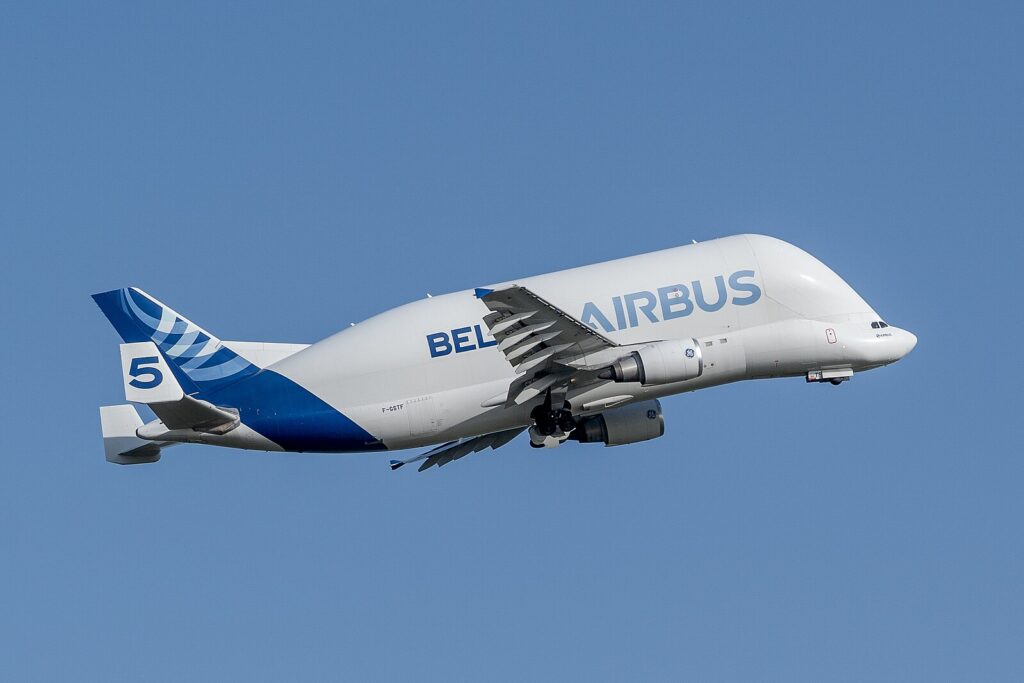
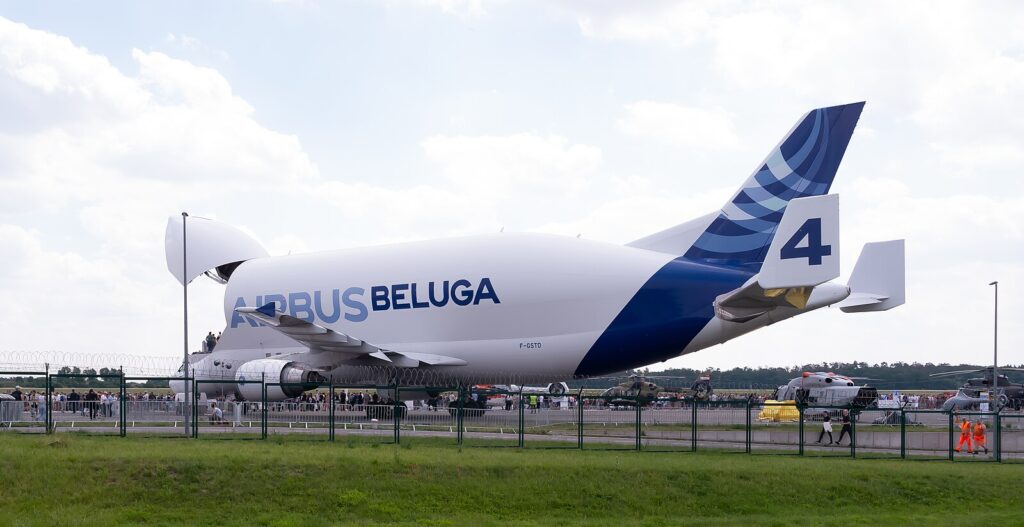
Designed to carry massive aircraft components across Europe (including parts of the Airbus A350 and A380), the Beluga XL is more than a cargo hauler. It embodies the intersection of bold design, operational efficiency, and long-range planning in modern aerospace.
Here’s why this whale-shaped freighter deserves your attention, and what it tells us about the future of transport aircraft.
As Airbus ramped up widebody jet production, including the A350 and A380, it faced a unique challenge: how to move fuselage sections, wings, and other large airframe parts between far-flung production sites.
The Airbus manufacturing ecosystem spans multiple countries: wings are built in Broughton and Hamburg, cockpit sections in France, and tailplanes in Spain, with final assembly taking place in Toulouse, France. These assembly lines rely on a steady flow of oversized parts moving on tight schedules.
For years, Airbus relied on the BelugaST (A300-600ST), a modified version of the Airbus A300, to carry these loads. But it wasn’t enough. As parts got larger, demand outgrew the aircraft’s capabilities. Airbus needed a bigger, better super transporter.
Based on the Airbus A330-200, the Beluga XL delivers a 30 percent increase in payload capacity over its predecessor, capable of hauling up to 51 tonnes of oversized cargo. Its cargo bay is over seven meters wide—enough to carry two A350 wings side by side.
Powered by two Rolls-Royce Trent 700 engines and operated by Airbus Transport International, the XL has a range of 2,300 nautical miles, connecting Airbus hubs across Germany, France, Spain, and the UK. It’s already replaced the older BelugaST fleet on high-priority routes.
And yes, that smile painted across its nose? That’s part of its official livery, chosen in an internal vote among Airbus employees.
While Boeing uses the modified 747 Dreamlifter to move parts of the 787 Dreamliner, Airbus took a different route. The Beluga XL wasn’t just a retrofit; it was a purpose-built design with logistics at its core.
And with the Antonov An-124 and An-225 increasingly grounded or unavailable due to geopolitical issues, the Beluga XL is one of the few aircraft in the world capable of lifting some of the largest cargo plane loads. It has already sparked interest outside Airbus for third-party freight jobs, especially for complex or oversized cargo missions.
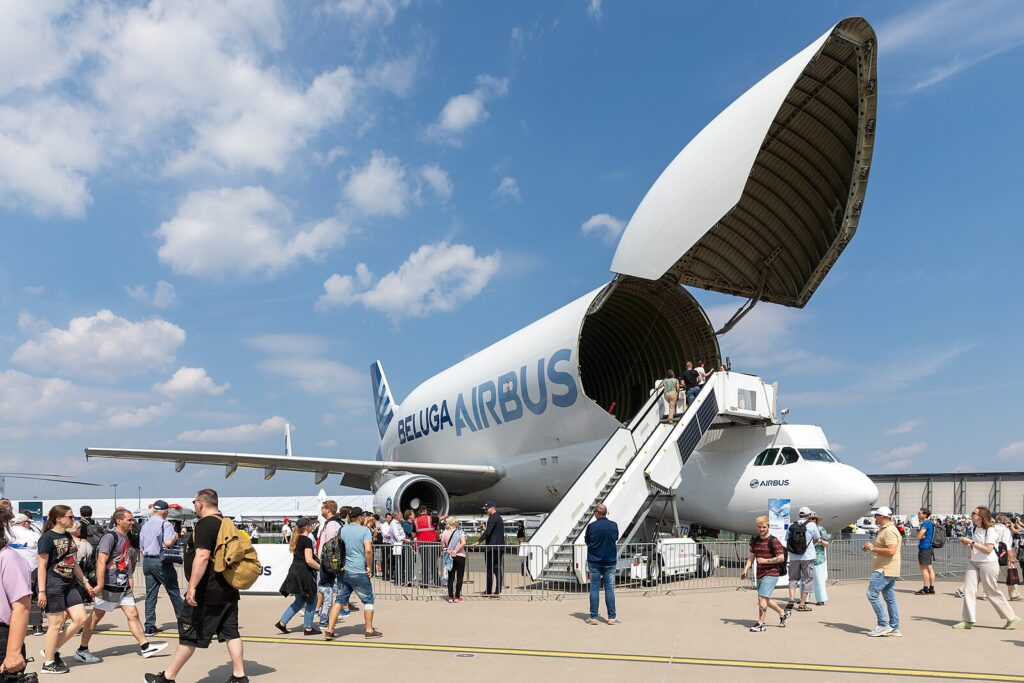
As the Beluga XL solidifies its place in Airbus’ internal logistics, broader changes in aviation are bringing renewed attention to aircraft safety and the shrinking pool of heavy-lift cargo options.
A recent emergency landing involving a Beluga XL cargo aircraft has brought aircraft reliability and flight crew readiness back into focus. Fortunately, no injuries occurred, but the incident has prompted renewed scrutiny of safety protocols and maintenance procedures specific to specialized freighters like the Beluga XL. With air traffic rebounding post-pandemic, industry experts stress the importance of proactive inspections and rigorous crew training to prevent similar in-flight issues across all aircraft types.
Before the BelugaXL, Airbus relied on the BelugaST, a previous generation of whale-shaped freighters, to transport oversized cargo. Now, Airbus has officially retired its BelugaST fleet from external commercial use, choosing instead to focus the aircraft solely on internal transport needs. Once a rare option for moving oversized cargo (such as helicopters, satellites, and energy components), the BelugaST’s withdrawal reduces capacity in a niche already stretched thin by geopolitical constraints on Antonov aircraft. With fewer heavy-lift options available, pressure grows on the remaining fleet of specialized operators to fill the gap.
The Beluga XL reflects a major transformation in global logistics. As sectors like aerospace, renewable energy, construction, and even space grow more modular and geographically distributed, cargo aircraft are becoming core infrastructure, not niche assets.
Global air cargo demand surged in 2024 and is expected to grow another 5% in 2025, continuing a strong post-pandemic rebound, according to IATA. At the same time, manufacturers face growing pressure to modernize logistics operations and reduce carbon emissions. Airbus, for instance, has committed to net-zero by 2050, requiring smarter transport systems with fewer empty hauls and tighter route planning, an area where purpose-built freighters like the Beluga XL shine.
More broadly, Airbus’s decision to internalize oversized cargo transport signals a shift in how original equipment manufacturers (OEMs) manage risk. Relying on vulnerable third-party assets (like the increasingly grounded Antonov fleet) is no longer tenable. OEMs are reasserting control over their supply chains to protect timelines, reduce bottlenecks, and build long-term resilience.
This approach also highlights how innovation doesn’t always require reinventing the wheel. By adapting A330 components, Airbus reduced development costs while creating a highly specialized, strategically valuable platform. In an era where global production lines rely on speed, flexibility, and precision, logistics systems like this are quietly becoming a competitive edge.
The Beluga XL might not carry passengers, but it carries the weight of a continent-spanning production line. It supports aircraft and, in turn, supports economies. And as aviation enters a new phase (facing decarbonization, automation, and global uncertainty), it’s the behind-the-scenes logistics innovations that will quietly shape who stays agile—and who falls behind.
So next time you see a Boeing 747, an Airbus A380, or any sleek airliner overhead, remember: that plane probably wouldn’t be flying without the Beluga XL having delivered its parts first. In the future of aviation, it’s not just the planes themselves, but the logistics behind them, that will shape what comes next.
What do you think? Should Airbus expand Beluga XL operations beyond internal use to meet growing oversized cargo demand? Dive into discussions like this on The Aviation Co., a space for aviation lovers, frequent flyers, and pros to connect.
© 2025 aviation.co All rights reserved.