Aeronautics
Cessna 150: The Ultimate Guide to the Iconic Training Aircraft
7 min read

7 min read
In the world of general aviation, few aircraft have made a more lasting impact than the Cessna 150. For decades, this compact, single-engine, two-seat airplane has served as the go-to aircraft for flight training, and it has launched countless pilots into the skies for their first flight.
Designed for flight training but beloved by private owners, the Cessna 150 has remained a pillar of the aviation community for more than half a century after its debut. Here’s everything you need to know about this iconic aircraft—from performance and specs to how it compares with planes like the Cessna 172 Skyhawk, Beechcraft, and Mooney models.
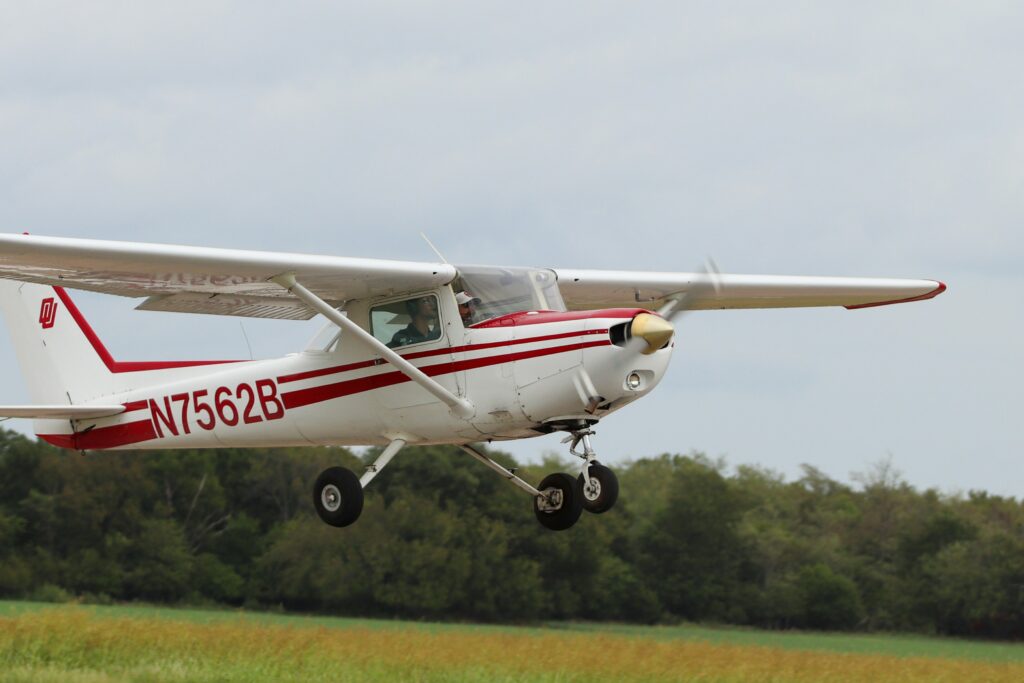
Introduced in 1957, the Cessna 150 was built with one primary purpose: to train new pilots safely and affordably. With its high-wing design and tricycle landing gear, the 150 was far more forgiving on the ground than traditional tailwheel (or taildragger) aircraft, which demand more precision during taxiing and landing.
The result? A surge in flight schools adopted the 150 for flight training programs, where it quickly became the go-to aircraft for student pilots across the U.S. and around the world.
Mastering the impact of weight and balance is one of the first real-world lessons student pilots face in the cockpit. Weight and balance calculations help students understand how every gallon of fuel or extra pound of gear impacts safety, stability, and even takeoff performance. The Cessna 150 makes these lessons real, immediate, and unforgettable.
Beyond the training environment, the 150 has become a favorite among budget-conscious owners looking for a reliable commuter or weekend aircraft. While it’s not fast or spacious, it’s perfect for short hops between airfields, brunch fly-ins, or sightseeing adventures.
For many pilots, owning a Cessna 150 is a cost-effective way to stay current, explore new places, or simply enjoy the thrill of flying.
In the broader world of general aviation, the Cessna 150 competes with legacy aircraft from brands like Beechcraft and Mooney. While the Beechcraft Musketeer offers more space and the Mooney M20 excels in speed and efficiency, neither model has matched the Cessna 150’s reputation in primary flight training.
The 150’s strength lies not in its speed or luxury but in its simplicity—something that more advanced aircraft simply can’t replicate for new pilots.
The airframe is constructed with all-metal materials, built to endure the rigors of flight schools and frequent use. The fuselage is compact but efficient, designed to accommodate two seats, basic controls, and light baggage.
Its wingspan of 33 feet 4 inches provides solid low-speed performance and smooth handling in the pattern. The aircraft’s low wing loading (about 10.5 lb/ft²) contributes to its forgiving stall behavior, making it perfect for practicing slow flight, stalls, and go-arounds.
Early models of the Cessna 150 came equipped with bare-bones avionics, often just the essentials for VFR flight. Over time, many have been upgraded with GPS units, transponders, and ADS-B technology to meet modern-day requirements.
The basic panel forces students to focus on core piloting skills (coordination, pitch control, and situational awareness) before relying on automation or glass displays.
The majority of 150s use the Continental O-200 engine, producing 100 horsepower. Later models, such as the 150L and 150M, featured the more robust Lycoming O-235. Both engines are known for their reliability and easy maintenance.
The aircraft cruises at about 90–100 knots and has a service ceiling of 14,000 feet. Takeoff performance is strong for its class, requiring about 735 feet under standard conditions, but conditions like density altitude and weight can impact performance. A lightly loaded 150 can easily outperform expectations during takeoff, especially with a clean headwind.
Its fuel capacity of 26 gallons (22.5 usable) gives pilots a range of 300–350 nautical miles, making it ideal for short trips, pattern work, or cross-country training missions.
Depending on the model and configuration, the Cessna 150 typically has a gross weight of approximately 1,600 pounds and an empty weight of around 1,100 pounds. That leaves a useful load of about 500 to 550 pounds (just enough to carry two average-sized adults, full fuel, and a light bag or two).
Many pilots transition from the 150 to the Cessna 172 Skyhawk, which offers four seats, a more powerful engine, faster cruise speeds, and a greater useful load. The 172 is also commonly used for instrument training, thanks to its expanded panel space and avionics options.
Still, the 150 remains the more economical and approachable trainer. It costs less to operate, burns less fuel, and provides a hands-on learning experience for beginner pilots.
Keeping a 150 hangared helps protect its airframe, fuselage, and avionics from weather damage. With regular maintenance and inspections, these aircraft can last decades. Many 150s built in the 1960s and 1970s still fly regularly, often with upgraded panels and interiors.
Whether you’re planning your first flight, pursuing your private pilot license, or looking for a dependable commuter aircraft, the Cessna 150 checks every box. Its simple tricycle landing gear, predictable wing loading, manageable empty weight, and reliable performance make it one of the leading options for aircraft training.
What do you think: Is the Cessna 150 still the ideal aircraft for student pilots, or has newer tech left it behind? Dive into discussions like this on The Aviation Co., a space for aviation lovers, frequent flyers, and pros to connect.
How much does a used Cessna 150 cost today?
The Cessna 150 remains one of the most affordable ways to own an aircraft. In 2025, used models typically sell for $25,000 to $45,000, depending on year, hours, and avionics. Well-kept planes with upgraded panels sit at the high end, while older models are more affordable. For budget-minded aviators, the 150 is still one of the most economical ways to fly.
Is the Cessna 150 a good airplane for solo cross-country flights?
Yes, within its limits. Cruising at 90–100 knots with a range of about 300–350 nautical miles, the Cessna 150 is well-suited for solo cross-country flights and weekend trips. While it isn’t fast or spacious, its reliability, forgiving handling, and low operating costs make it a solid choice for training and personal flying.
What type of pilot license can you train for in a Cessna 150?
The Cessna 150 was designed as a trainer, and excels in that role. Student pilots can use it to earn their Private Pilot License (PPL) and, in many cases, their Sport or Recreational Pilot certificates as well. While its size and avionics make it less common for instrument training, the 150 remains a foundational aircraft for building core piloting skills.
How does the Cessna 150 perform in high-altitude airports or hot weather conditions?
The Cessna 150 is underpowered in high-density altitude conditions. With only 100 horsepower, takeoff distance increases and climb rate drops significantly, especially with two adults onboard. Careful weight planning and performance checks are essential at high-altitude airports.
Can two adults comfortably fly in a Cessna 150 for longer trips?
Comfort in a Cessna 150 is relative. Two adults can fit, but the cabin is snug, and baggage capacity is minimal. For short flights, sightseeing, or training, the setup works fine. On longer cross-country trips, the limited legroom and small cabin can feel tight, especially compared to a Cessna 172. The 150 shines as a trainer and short-hop flyer, not a long-distance cruiser.
© 2025 aviation.co All rights reserved.