Innovation
The Future Is Flying: Inside JetZero and Delta’s Blended-Wing Bet
6 min read

Love Aviation? Turn your passion into a career. Explore Aviation Maintenance Programs at AIM. Learn More
6 min read
By: Aviation Co.
What if your next long‑haul flight wasn’t on a tube with wings, but on a sleek, wing‑shaped aircraft designed to cut fuel use by up to half? That’s the premise behind JetZero’s Z4 blended‑wing‑body aircraft—a concept attracting backing from Delta Air Lines and United Airlines Ventures.
With mounting pressure to reduce carbon emissions and improve operational efficiency, this radical design could mark a key turning point in commercial aerospace.
In this article, we’ll explore how JetZero’s Z4 is redefining aircraft design, why major players are backing it, and what its development means for the future of fuel-efficient, long-haul aviation.
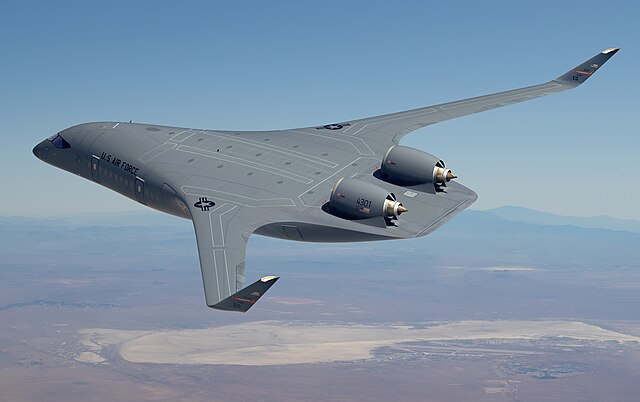
A blended-wing body (BWB) merges the fuselage and wings into a single, continuous aerodynamic form. Unlike conventional aircraft that feature a cylindrical body attached to wings, the BWB structure allows for more even lift distribution, reduced drag, and greater internal volume.
Based in Long Beach, California, and led by co-founder and CEO Tom O’Leary, JetZero operates a growing development hub where engineers are working to solve the unique aerodynamic challenges of blended-wing design. JetZero has emerged as one of the most promising aerospace startups aiming to reshape commercial aviation. JetZero’s Z4, still in development, is among the most high-profile attempts to commercialize this architecture.
Rooted in decades of military and academic research, including Northrop’s flying wing concepts, the Z4 is engineered to be lighter, quieter, and dramatically more fuel-efficient than today’s narrowbody and widebody jets.
JetZero claims the Z4 will consume up to 50% less jet fuel on long-haul routes compared to today’s aircraft, significantly reducing overall fuel consumption across fleet operations. This is achieved through aerodynamic efficiency, lighter materials (including advanced composites), and optimized propulsion placement. In addition to burning less fuel, the Z4 is being designed to run on sustainable aviation fuel (SAF)—a critical feature as the industry targets net-zero emissions by 2050.
Unlike hydrogen or electric propulsion concepts, which face infrastructure and scalability hurdles, the Z4 presents a near-term path to emissions reduction using existing airport infrastructure and fuel systems. That positions it as an attractive option for airlines looking to decarbonize without compromising on range or payload.
Delta’s operational collaboration with JetZero signals a strategic interest in shaping the next generation of aerospace innovation. Beyond airline partners, the U.S. Air Force has also awarded JetZero a contract to mature blended-wing-body technologies, with technical support from companies like Northrop Grumman.
For both OEMs and operators, BWB aircraft could reduce operating costs over time while offering new flexibility in aircraft layout and performance. Long-haul efficiency, improved range, and potentially lower maintenance demands make the Z4 attractive from both a commercial and technical standpoint.
Andrew Chang, managing director of United Airlines Ventures, called JetZero’s vision a potential leap forward in fuel efficiency and cabin experience, underscoring the broader industry interest in BWB innovation.
With a fundamentally different shape come entirely new engineering questions. The airflow around a BWB is far less predictable than that around traditional tube-and-wing configurations, and issues like pitch control and stall behavior need to be solved through novel control surface designs and flight software.
Aerospace engineers will be on the front lines of solving these problems, applying advanced CFD modeling, high-fidelity simulations, and flight testing to ensure certification. Likewise, interior layout and pressurization models will need to be rethought, offering fresh challenges for cabin design specialists and systems engineers alike.
While the Z4 is still in development, it hints at how aviation roles might evolve in the near future. Here’s how it could impact your path, depending on your area of focus.
If you’re training to become an A&P or already working in maintenance, get ready for significant changes in how aircraft are built, maintained, and serviced. Blended-wing body aircraft like the Z4 may introduce not only a new silhouette but also new materials, unconventional cabin layouts, and entirely different maintenance cycles. You can expect to work with advanced composites, redesigned interiors, and service models that require specialized certifications and training.
For engineers, the Z4 presents a rare opportunity to work at the forefront of structural design, systems integration, and aerodynamic innovation. Its radically different airframe challenges traditional assumptions, offering ground for breakthroughs in airflow modeling, control surface development, and fuselage design.
And if you’re a student or just entering the aviation field, this isn’t a distant concept. By the time you graduate, BWB aircraft may already be part of the commercial fleet. With sustainability now a core requirement across the industry, understanding fuel-efficient platforms like the Z4 could be key to launching your career in a rapidly evolving aviation landscape.
Working on the Z4 won’t look like traditional aviation roles. Here’s what to expect if you’re entering the field or considering a transition.
For A&P technicians, servicing a blended-wing aircraft will require new training—particularly in composite repair techniques and rethinking how systems are accessed and maintained in a non-traditional airframe. If you’re pursuing your FAA license now, you may soon be applying it to a shape and structure, unlike anything you’ve worked on before.
Engineers will find themselves solving some of the most complex aerodynamic challenges in modern aviation. Skills in CFD modeling, CAD design, and systems integration will be critical to overcoming issues like pitch control, pressurization, and flight stability—areas that are still being explored and refined on the Z4.
For those in MRO planning or fleet logistics, the Z4 introduces entirely new considerations. A blended-wing layout could alter inspection routines, part sourcing, and long-term service strategies, especially as airlines seek to minimize downtime while adapting to unfamiliar structures and systems.
For students and early-career professionals, the rise of blended-wing aircraft represents a rare opportunity to work on a clean-sheet commercial aircraft concept from the ground up. With JetZero leading the charge, and support from United Airlines Ventures and Delta Air Lines, this technology could become standard within the next two decades (if not sooner).
Those pursuing careers in aerospace engineering, airframe maintenance, or sustainability strategy will find blended-wing bodies at the intersection of all three. As the Z4 progresses through prototyping and certification, it may very well define the shape of the industry’s future.
What do you think: Can the Z4 overcome the engineering hurdles ahead and become the new standard for long-haul efficiency? Dive into discussions like this on The Aviation Co., a space for aviation lovers, frequent flyers, and pros to connect.
© 2025 aviation.co All rights reserved.