Aeronautics
Why the Airbus A220 Is the Future of Single-Aisle Aviation
5 min read

Love Aviation? Turn your passion into a career. Explore Aviation Maintenance Programs at AIM. Learn More
5 min read
By: The Aviation Co.
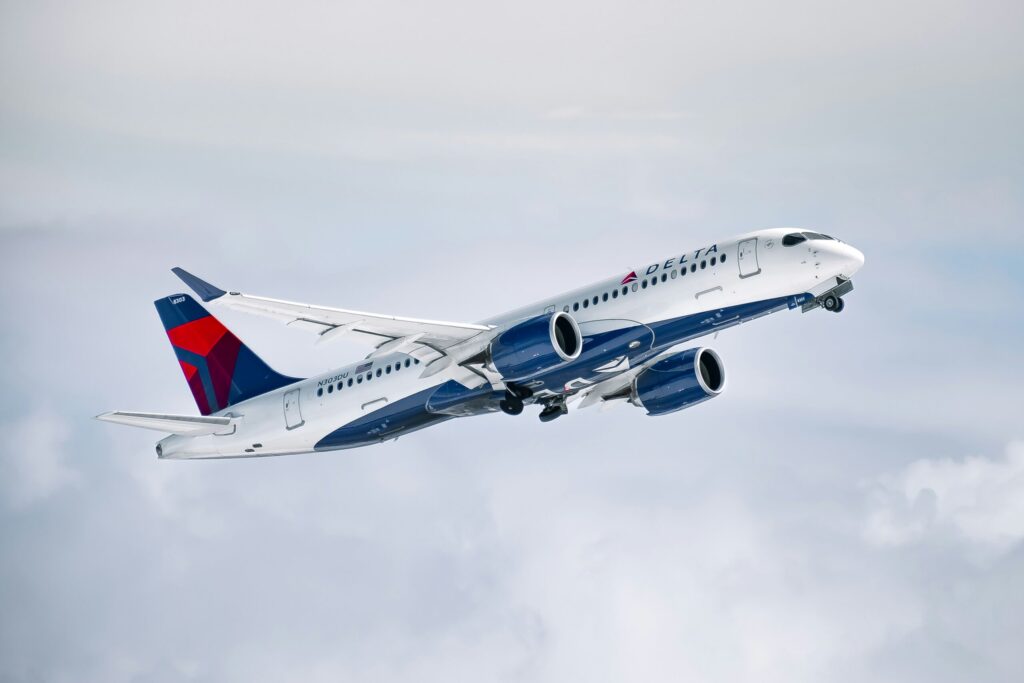
When Airbus took over the Bombardier CSeries in 2018, few could have predicted just how quickly it would rise. The Airbus A220 has since become one of the most talked-about aircraft in the skies, and for good reason. With a clean-sheet design, remarkable fuel efficiency, and comfort typically reserved for widebody jets, the A220 is redefining what a single-aisle aircraft can be.
For airlines like airBaltic, Delta Air Lines, and Air Austral, the A220 family represents a smarter way to fly by reducing fuel burn while enhancing passenger experience. As more carriers expand their A220 fleets, one thing is clear: this jet is defining the next generation of commercial aviation.
Most aircraft families evolve over time, like the A320neo or Boeing 737 MAX. The A220 took a different path. Originally developed by Bombardier as the CSeries, it was a clean-sheet design created specifically for today’s flight demands and efficiency goals.
Every detail of the A220 reflects its fresh, purpose-built design. Its sleek aerodynamics, lightweight fuselage, and use of advanced materials all work in harmony to improve efficiency and lower emissions. The A220’s streamlined wing design and high-aspect ratio help it achieve excellent lift-to-drag performance, giving it a range that pushes the boundaries of what’s possible for regional aircraft.
At Airbus’ Mirabel facility in Quebec, production has scaled steadily since the company took over the Bombardier CSeries program in 2018, with Airbus refining the supply chain to meet growing global demand. The result? A reliable, modern aircraft that’s flexible enough to serve both short-haul and medium-haul markets, all while keeping operating costs in check.
At the heart of the A220’s performance are its Pratt & Whitney PW1500G geared turbofan engines. These state-of-the-art GTF engines deliver up to 20 percent less fuel burn and up to 50 percent lower noise levels compared to previous-generation jets.
By separating the fan and low-pressure turbine speeds, the engine runs more efficiently and quietly, which is a breakthrough that’s reshaping how manufacturers think about propulsion. For airlines, there are several benefits, including lower emissions, reduced operating costs, and the ability to access airports with stricter noise restrictions.
Combined with the A220’s sleek aerodynamic design, this engine innovation positions the aircraft at the forefront of sustainable aviation, delivering performance gains that are as measurable as they are impressive.
The A220 has found its stride in the 100–150 seat market, filling a gap between traditional regional jets and larger narrowbodies. The A220-300, in particular, gives airlines the flexibility to operate both short-haul and medium-haul flights efficiently.
Take airBaltic, for instance. The Latvian carrier operates an all-A220 fleet, using it to open new routes, reduce turnaround times, and boost profitability across Europe and beyond. Delta Air Lines has also leaned into the aircraft’s versatility, flying it on both high-frequency domestic routes and longer sectors like Salt Lake City to New York.
With impressive range, lower fuel consumption, and consistent reliability, the A220 family is enabling airlines to rethink what’s possible with smaller aircraft, and proving that efficiency doesn’t have to come at the expense of capability.
Step inside an Airbus A220, and it’s clear this isn’t a typical single-aisle experience. The cabin (crafted with Airbus’ Airspace vision in mind) prioritizes passenger well-being and modern aesthetics.
Every detail feels purposeful: wide seats, large windows, quieter cabins, and oversized overhead bins that fit standard carry-ons with ease. This intentionality results in an environment that feels more like a widebody than a regional jet.
This focus on passenger comfort is about loyalty just as much as it is about luxury. Airlines report higher customer satisfaction on the A220 compared to older Boeing 737 or A320 aircraft, and that difference matters in an increasingly competitive market.
The A220 family now sits at the core of Airbus’ narrowbody strategy, bridging the space between the A320neo and smaller regional types like the Embraer E-Jet. It gives Airbus a powerful position in the 100–150 seat category, which Boeing has struggled to match.
By combining state-of-the-art engineering with lower operating costs, the A220 helps airlines future-proof their fleets against rising fuel prices and tightening environmental regulations. And as Airbus expands its supply chain and explores new variants, the aircraft’s potential only continues to grow.
The Airbus A220 represents what modern aviation should be: efficient, sustainably-minded, and passenger-focused. Its clean-sheet design, advanced turbofan engines, and forward-thinking cabin set a new benchmark for the single-aisle category.
As airlines seek to balance profitability with environmental responsibility, the A220 proves that you don’t have to choose between the two.
What do you think: Is the Airbus A220 the future of single-aisle travel, or will next-gen Boeing models reclaim the spotlight? Share your take on The Aviation Co., a space for aviation lovers, frequent flyers, and pros to connect.
© 2025 aviation.co All rights reserved.