Aeronautics
Darkstar Plane or SR-72: The Aircraft That Inspired Top Gun
7 min read

Love Aviation? Turn your passion into a career. Explore Aviation Maintenance Programs at AIM. Learn More
7 min read
By: Aviation Co.
When Maverick pushes past Mach 10 in Top Gun: Maverick, it’s not just Hollywood flair; it’s a nod to the real-life race for hypersonic flight. The jet? Fictional. But the inspiration behind the Darkstar is very real—and so are the engineering feats that make speeds like that more than just movie magic.
Though created for the screen, Darkstar’s design is rooted in real-world aerospace innovation. Its inspiration points directly to the SR-72, a next-generation hypersonic aircraft reportedly under development by Lockheed Martin’s Skunk Works.
Here’s what we know about the connection between Darkstar and the Lockheed Martin SR-72, and how this project could mark a dramatic shift in the way the U.S. Air Force approaches the skies.
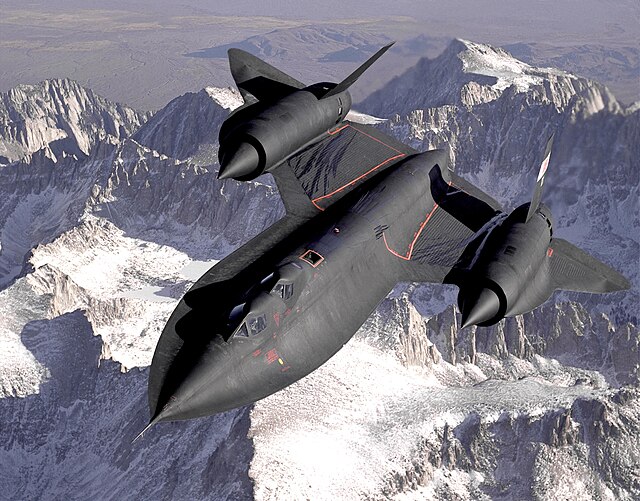
To understand the hype around the SR-72, we have to go back to its predecessor: the legendary SR-71 Blackbird. Lockheed’s SR-71 was designed in the 1960s to outrun surface-to-air missiles at over three times the speed of sound. It cruised above 85,000 feet, collected reconnaissance with precision, and held the world speed record for decades.
The SR-71 served as the pinnacle of reconnaissance aircraft technology during the Cold War. And when the U.S. retired it in the late ’90s, a question remained: What comes next?
The aircraft in Top Gun: Maverick might have been fictional, but it is far from fantasy. It’s said to be inspired by the SR-71’s replacement, the SR-72.
According to reports, the studio consulted engineers to design an aircraft that felt real, and reportedly used early SR-72 concepts as reference. Razor-sharp geometry. Low observable surfaces. Mind-boggling speed. It wasn’t a real jet, but it was inspired by real ideas.
The SR-72 is often referred to as the “Son of Blackbird” and is designed to reach hypersonic speeds, with a rumored top speed of Mach 6. That’s twice as fast as the SR-71.
The aircraft is expected to be a UAV (unmanned aerial vehicle), capable of conducting ISR (intelligence, surveillance, and reconnaissance) missions, and potentially launching hypersonic missiles. Unlike conventional fighter jets, the SR-72 would act as a spy plane or first-strike platform that could penetrate contested airspace before detection.
Lockheed Martin has released limited information, but insiders suggest that the SR-72 will use a combined ramjet-scramjet propulsion system, enabling it to operate efficiently at both subsonic and hypersonic speeds.
Beyond its cinematic cameo, Darkstar symbolizes a bold step forward in aerospace technology. It’s more than a fictional marvel: it’s a conceptual preview of what the real SR-72 could achieve. Sustained hypersonic flight isn’t just an engineering flex; it’s a gateway to transformative advancements across defense, space, and even commercial aviation.
Breaking Mach 5+ isn’t just about raw speed. True hypersonic capability demands breakthroughs in multiple disciplines, each with wide-reaching implications.
The SR-72 could usher in a new era of ISR (intelligence, surveillance, and reconnaissance) and tactical response. At Mach 6, a hypersonic platform could cross oceans in less than an hour, delivering real-time intelligence or deploying payloads before current air defenses have time to react. In contested environments, speed becomes survivability.
Flying at hypersonic speeds means dealing with skin temperatures that can exceed 1,500°F. Managing this heat load requires innovations in cooling systems, heat shielding, and airframe design. These same systems could be adapted to protect spacecraft during atmospheric reentry or improve next-gen propulsion systems.
Hypersonic vehicles require materials that can withstand intense heat and pressure while staying lightweight. Current advancements in ultra-high-temperature ceramics, composites, and additive manufacturing are driving innovation across the aerospace industry, with potential applications for everything from spaceplanes to next-generation airliners.
While the SR-72’s mission is military, its tech could eventually trickle down into the commercial space. Imagine flying from New York to Tokyo in under three hours, or touching down in London from Los Angeles in less than two, slashing today’s 12-hour flights to a fraction of the time. With Mach 5+ aircraft, global travel could shift from a daylong ordeal to something closer to a morning commute.
Darkstar didn’t just steal the screen. It reignited imaginations. The buzz surrounding Top Gun: Maverick has sparked more than box office success; it has stirred real curiosity about the future of flight.
By blending Hollywood spectacle with cutting-edge aerospace design, the film spotlights the engineers, test pilots, and visionaries who push the limits of what’s possible. For students and emerging professionals in fields like propulsion, aerospace systems, and ISR, the SR-72 Darkstar represents more than a prototype. It is a symbol of what ambition, science, and creativity can achieve.
If the SR-72 ever takes to the skies, it could shatter more than speed records. It could shift our perception of how far and how fast humanity can go. And even if it never leaves the ground, its influence is already airborne. It is sparking conversation, inspiring careers, and reminding the world that the next leap in aviation starts with a bold idea.
Whether or not the SR-72 Darkstar becomes the next great leap in aviation, its cultural and technological impact is already being felt. Top Gun: Maverick may have dramatized it, but the science behind the Darkstar plane is very real.
As Lockheed Martin continues development behind closed doors, aviation enthusiasts will be watching closely. The era of Mach 6 is coming. The only question is: who will get there first?
What do you think: Will the SR-72 ever make it off the drawing board and into the skies? Dive into discussions like this on The Aviation Co., a space for aviation lovers, frequent flyers, and pros to connect.
Is the SR-72 Darkstar a real aircraft?
Not yet, but it’s more than Hollywood fiction. The SR-72 is a concept from Lockheed Martin’s Skunk Works, the same team behind the SR-71 Blackbird, and is designed to push the limits of hypersonic flight. While you can’t spot one on the ramp today, the tech behind it is in development, and it’s shaping the future of military aviation.
What is the difference between the SR-71 and SR-72?
The SR-71 was the fastest jet of its era, reaching over Mach 3. The SR-72 targets Mach 6 with a turbine-based combined-cycle engine that can switch to scramjet mode mid-flight. It’s the Blackbird’s faster, more capable successor, designed to reach altitudes and speeds the SR-71 could never touch.
How fast could the SR-72 potentially fly?
The SR-72 could reach Mach 6 (about 4,600 mph), which is fast enough to cross the U.S. in under an hour. Sustaining that speed means every surface and system must endure extreme heat and stress. If built, it could revolutionize intelligence gathering, global response times, and high-speed research, opening possibilities far beyond anything in today’s aviation fleet.
Could hypersonic aircraft like the SR-72 be used for civilian travel?
In theory, hypersonic jets could carry passengers. In reality, the technology isn’t ready. Extreme heat, deafening sonic booms, high costs, and safety challenges stand in the way. Military and research programs will pioneer the breakthroughs first, with commercial travel likely decades off, if it becomes viable at all.
Why did Top Gun: Maverick include a hypersonic plane like Darkstar?
Top Gun: Maverick used Darkstar to showcase the thrill and potential of hypersonic flight. Its sleek, futuristic design (developed with input from Lockheed Martin) grounded the fictional jet in real aerospace concepts. The result was so convincing that some viewers believed Darkstar was an actual classified aircraft, blurring the line between movie magic and reality.
© 2025 aviation.co All rights reserved.