Aeronautics
What the Fastest Plane in the World Says About Aviation’s Future
5 min read

Love Aviation? Turn your passion into a career. Explore Aviation Maintenance Programs at AIM. Learn More
5 min read
By: Aviation Co.
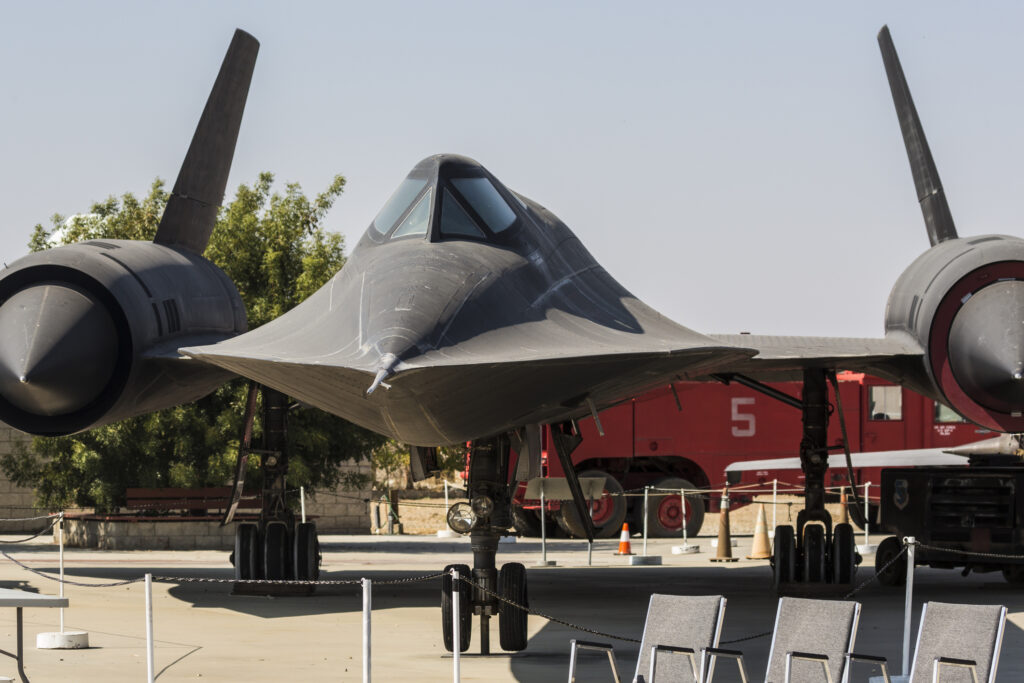
When most people search for the fastest plane in the world, they expect to find a cutting-edge stealth jet or some classified hypersonic marvel. Instead, the answer takes us back to a 1960s spy plane that still makes modern engineers scratch their heads: the SR-71 Blackbird.
The fact that no modern aircraft has topped the Blackbird’s Mach 3.3 speed record tells us something important about where our industry has been heading, and where it might go next.
The SR-71 Blackbird wasn’t just fast for the sake of being fast. When the United States Air Force (USAF) and Lockheed Martin’s Skunk Works designed this aircraft, speed was survival. Flying at high altitudes above 85,000 feet, the Blackbird could outrun Soviet interceptor aircraft and surface-to-air missiles through pure velocity. Mach 3.3 wasn’t a gimmick: it was a mission-critical requirement.
When enemy radar locked on, the pilot’s response was simple: push the throttles forward and watch the threat fall behind. No stealth coating, no electronic warfare systems. Just titanium engineering and physics working at their absolute limits.
Other aircraft have set impressive speed records. The Concorde, the fastest passenger plane, cruised at Mach 2.04 while serving champagne. NASA’s experimental X-43 scramjet touched a whopping Mach 9.6 for a few seconds before becoming expensive debris in the Pacific. But for sustained, operational missions? The SR-71 stands alone as the fastest aircraft ever built for real-world use.
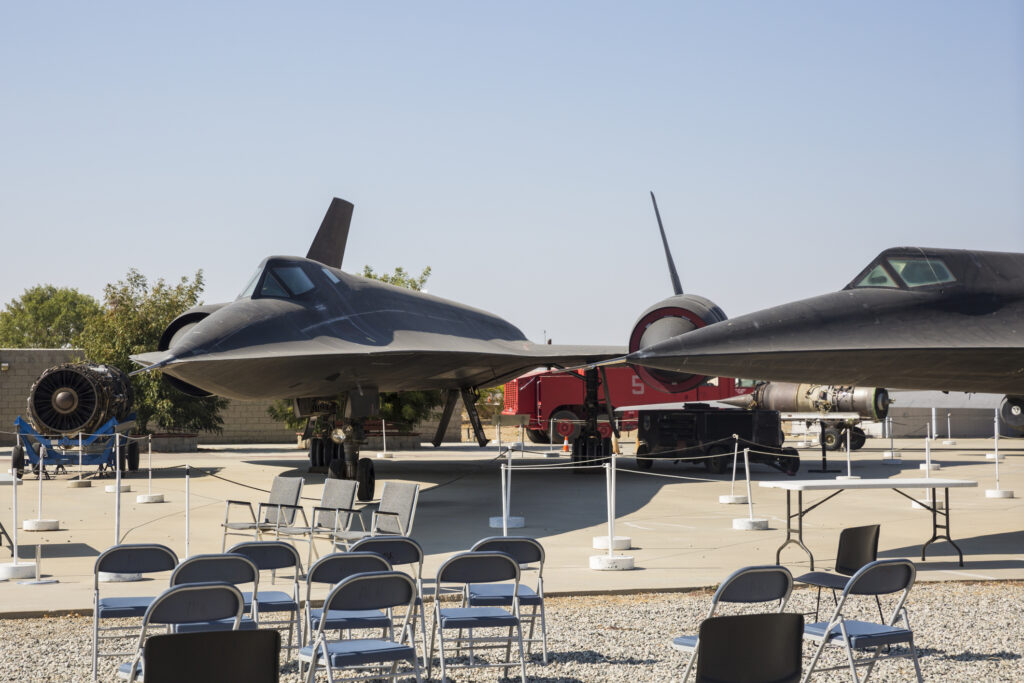
So why hasn’t any other aircraft been able to top the SR-71 Blackbird’s speed? The answer isn’t about technology; we have better materials, more advanced jet engines, and computing power that the Cold War engineers couldn’t imagine. The answer is priorities.
Since the SR-71’s retirement in 1998, aerospace has shifted focus. The Air Force wanted stealth fighters like the F-22 Raptor and F-35 Lightning II. The US Navy needed aircraft carrier-capable jets. Boeing and other manufacturers optimized for cost-effectiveness and multi-role capability.
Modern military aircraft, like the F-15 Eagle, top out around 2.5, while the F-22 Raptor maxes out at roughly Mach 2.25. Even the Russian MiG-31 Foxhound, designed specifically as a high-speed interceptor, falls short of the Blackbird’s top speed. These aircraft excel at sensor fusion, network-centric warfare, and precision strikes, but in raw airspeed? They’re slower than a reconnaissance plane from the Vietnam era.
The SR-71’s reign exposes a cautionary truth: progress isn’t measured by speed alone, and innovation often bows to strategy and budget. Aviation shifted its focus from raw velocity to resilience. We gained survivability, but the next leap could bring speed back into the equation.
The SR-61 proved that speed could be its own defense system. When you’re fast enough, you don’t need to hide; you just need to get there and leave before anyone can respond. Today’s stealth fighter aircraft take the opposite approach: avoid detection entirely.
Both philosophies work, but they create different capabilities. The F-117 Nighthawk proved that stealth technology could revolutionize warfare during its first flight over Baghdad. Modern fighters like the Su-27 Flanker and MiG-29 rely on agility and electronic countermeasures. Each approach has merit, but something was lost when we stopped building aircraft that could simply outrun their problems.
Chuck Yeager, a United States Air Force officer, broke the sound barrier in the Bell X-1, proving that Mach 1 wasn’t an insurmountable wall. The SR-71 took that lesson and ran with it. Speed isn’t just about getting from New York to anywhere else faster. It’s about compressing enemy decision cycles and maintaining tactical initiative.
Every aerospace conference buzzes about hypersonic weapons and Mach 5+ aircraft. Headlines trumpet scramjet breakthroughs and secret programs. Here’s what they don’t tell you: none of it’s truly operational yet.
NASA’s X-43 hit Mach 9.6 for seconds before mission termination. Various experimental aircraft achieve impressive numbers in controlled test conditions at high altitudes. But can they take off tomorrow for an actual mission? Can they carry real payloads through contested airspace? Can they land, refuel, and do it again next week?
The SR-71 flew 3,551 sorties (operational missions) over 34 years. It was never shot down. It gathered intelligence, completed missions, and came home. That’s the difference between experimental speed and operational speed records that matter.
Until someone builds a hypersonic aircraft that can sustain real-world operations (not just brief test flights), the Blackbird’s record as the fastest manned aircraft stands firm.
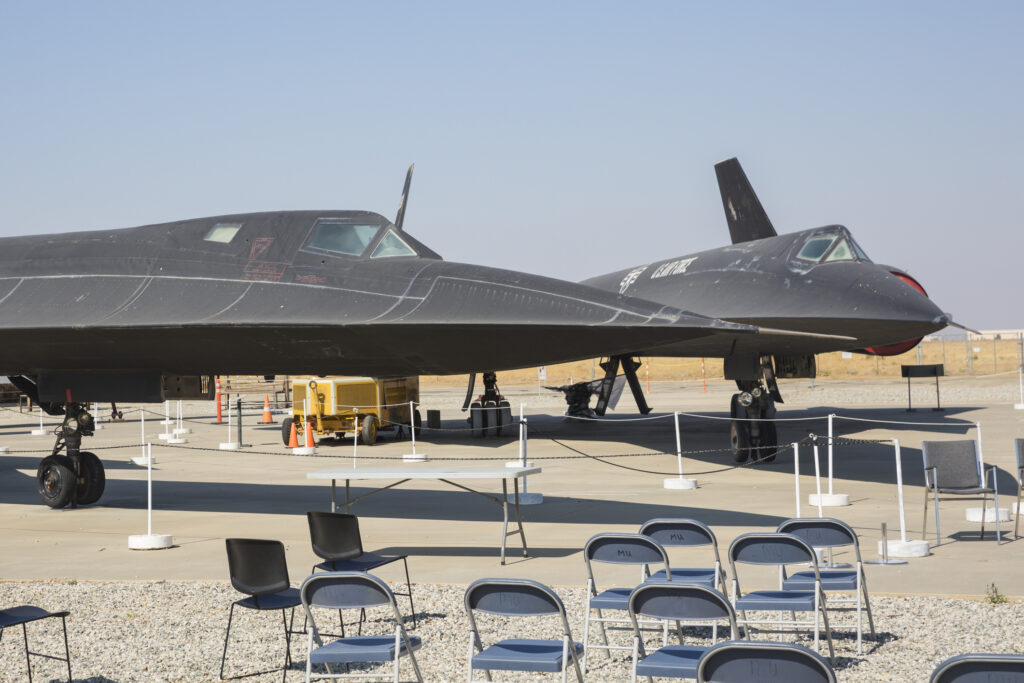
The SR-71’s enduring speed record reveals three critical insights about where aviation is heading. First, we’ve prioritized incremental improvements over breakthrough capabilities for decades. Second, the technologies to surpass the Blackbird already exist; we just haven’t committed to using them. Third, the industry is reaching a turning point where pure performance may matter again.
Russian aircraft manufacturers continue pushing speed boundaries with interceptor designs, while military aircraft development emphasizes multi-role capability and cost-effectiveness. Commercial aviation, meanwhile, focuses on efficiency rather than raw speed.
Yet interest in high-speed flight is returning. Private aerospace companies are exploring supersonic passenger aircraft, and military planners recognize that speed offers tactical advantages beyond stealth. The fundamentals that made the SR-71 possible (advanced jet engines, heat-resistant materials, aerodynamic design) have only improved over time.
The SR-71 Blackbird represents more than aviation history. It’s a benchmark, a challenge, and a reminder that sometimes the fastest way forward is remembering how fast we once went. Fifty years later, we still haven’t answered that challenge.
The fastest plane in the world is still waiting for someone bold enough to beat it.
What’s your take: If you were designing the next generation of high-speed aircraft, what trade-offs between speed, safety, and technology would you prioritize? Dive into discussions like this on The Aviation Co., a space for aviation lovers, frequent flyers, and pros to connect.
© 2025 aviation.co All rights reserved.